Can you imagine walking away from your PhD not for a month, not for a year, but for a full decade just to save a bird that everyone around you hated?
That is exactly what Dr. Purnima Devi Barman did. And because she made that choice, over 1,800 storks are alive today that would otherwise be gone.
Meet the Bird That Started It All
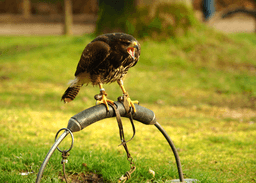
The Greater Adjutant Stork called "Hargila"in Assamese, which literally means "bone swallower” is not a bird people fall in love with at first sight. It stands over four feet tall, has a bald, wrinkled head, and hangs around garbage dumps and cremation grounds looking for food. For centuries, people in Assam believed seeing one brought bad luck. Village families chopped down the tall trees where these birds built their nests. Children threw stones at them.
Nobody wanted them around.By 2007, only around 450 Hargila birds were left in Assam. Scientists had listed the species as Endangered on the IUCN Red List. The bird was quietly disappearing and almost no one noticed or cared.

A Young Researcher Spots the Problem
Purnima did not find these birds in a textbook. She found them in her grandmother's paddy fields.
Her father served in the army. So as a young child, she went to live with her grandmother near the Brahmaputra river in Assam's Kamrup region. Every morning, her grandmother took her to the fields. And every morning, the Hargila were there — tall, slow, quietly doing their job.
She counted them. She learned songs about them. They felt like neighbours.
Years later, she went back to them through science. In 2007, she joined Gauhati University as a PhD researcher to study the Greater Adjutant Stork. But from the very first week, one thing bothered her — the birds she saw everywhere as a child were now almost impossible to find.
Then one afternoon, a phone call came from Dadara village.
The Day She Stopped Being a Researcher
A man in the village was cutting down a massive tree. That tree held nine Hargila nests. Baby birds were still inside.
By the time Purnima reached the spot, the chicks were already on the ground. She knelt down and picked them up. Some died right there in her hands. She had just become a mother herself; twin baby daughters were at home and those tiny heartbeats felt no different from her own children.
She asked the man why he cut the tree
He said the birds were dirty. A bad omen. A curse on his family.
The men surrounding her started laughing. They told her to go home. There she was, a young mother with birds dying in her arms, deciding for the next decade what her life would be like.
She left her PhD and never looked back For 10 Years
Most researchers write a paper on the problem. But Purnima walked into the problem.
She shut her books and went into the village. Not as a scientist. As a neighbour.
She went back to the same man who cut the tree. Calling him her brother, she began building a relationship with him. She helped clean his yard and sat with women during temple ceremonies.
She also participated in cooking events. There was never a lecture or a clipboard in sight. Instead, she simply showed up every day until people began to trust her.
One thing was clear to her. If the people who live near a wild animal do not want it there, then the animal cannot be saved. These storks did not nest in forests or wildlife reserves. They built homes on privately owned trees inside villages. There is no law that would make anyone want to care. That will have to change by way of trust.
She was able to build trust, one person, one family, one village at a time
She organised baby showers for Hargila nests, the same ceremonies Assamese families hold for expecting mothers. During the breeding season, traditional wedding songs became part of her conservation efforts. She worked with local women weavers to stitch the Hargila into their mekhala chadors and gamosas. At village meetings, she played simple games that helped people understand the role of every creature in the ecosystem.
The bird formerly used to make people pick up stones now made them pick up offerings.
400 Women Said Yes. Then 20,000 More Joined. In 2014, this movement got the name Hargila Army.
It started with around 400 women from Dadara village. More than 20,000 women in Assam today bear that name. They protect the trees where Hargilas build their nests. If a baby chick falls from a tree, they rush to rescue it. During the breeding season, they keep a close watch on the nesting sites. Many of these women also weave Hargila-themed stoles, sarees, and gamosas, which are sold across India and even to buyers overseas through their own platform, PashooPakshee.
Many of these women now take home around ₹10,000 every month. Where women had no income, no independence, no platform they now run conservation drives in their own communities and send their children to school.
Throughout it all, Purnima always made this secret promise to herself. She went back to her PhD in 2017. She completed it in 2019, 12 years after she began. Zero regrets.
Results Speak for Themselves
Nesting sites in Kamrup district: 27 in 2008 → over 300 today
Hargila population in Assam: under 450 → over 1,800
Assam now holds the world's largest breeding colony of Greater Adjutant Storks
The bird was moved from Endangered to Near Threatened status in 2023, by IUCN.
This is an unusual aspect. Species almost never come off the endangered list. This one did — because one woman refused to walk away, and 20,000 others stood with her.
Every Award She Has Earned
Nari Shakti Puraskar (2017) — India's highest civilian honour for women, presented by the President of India
Whitley Award / Green Oscar (2017) — Royal Geographical Society, London
UN Champions of the Earth Award (2022) — The United Nations' highest environmental honour
Whitley Gold Award (2024) — For outstanding grassroots conservation
TIME Women of the Year (2025) — The only Indian woman on the global list
She was among 15 recipients of Kia America’s Wayfinder Awards around the world, announced by the National Geographic Society two days ago on June 10, 2026. She flies to Washington D.C. on June 13. The award ceremony runs from June 14 to 18.
She named this award after her father, who died only days before she received this report. She said she wanted to give him a good name.
This Story For All Animal Lovers
Hargila wasn't a tiger. Not a dolphin. Not a snow leopard. It was a scavenging stork that lived near garbage and smelled bad. There was no fundraising for it. No one had a poster made.
But it needed someone willing to fight for it and Purnima showed up.
Saving animals doesn't always have to be a big budget, or a powerful policy. Sometimes it goes like this: one person is sitting at a cooking competition in a village and without any sound, changes the ways people think about a bird.